BMW M140i Without OPF: How to Defend Its True Value When Selling
A pre-OPF BMW M140i is not simply an older car — it is a mechanically distinct vehicle that standard valuation tools consistently underestimate. Here is how to price yours accurately.
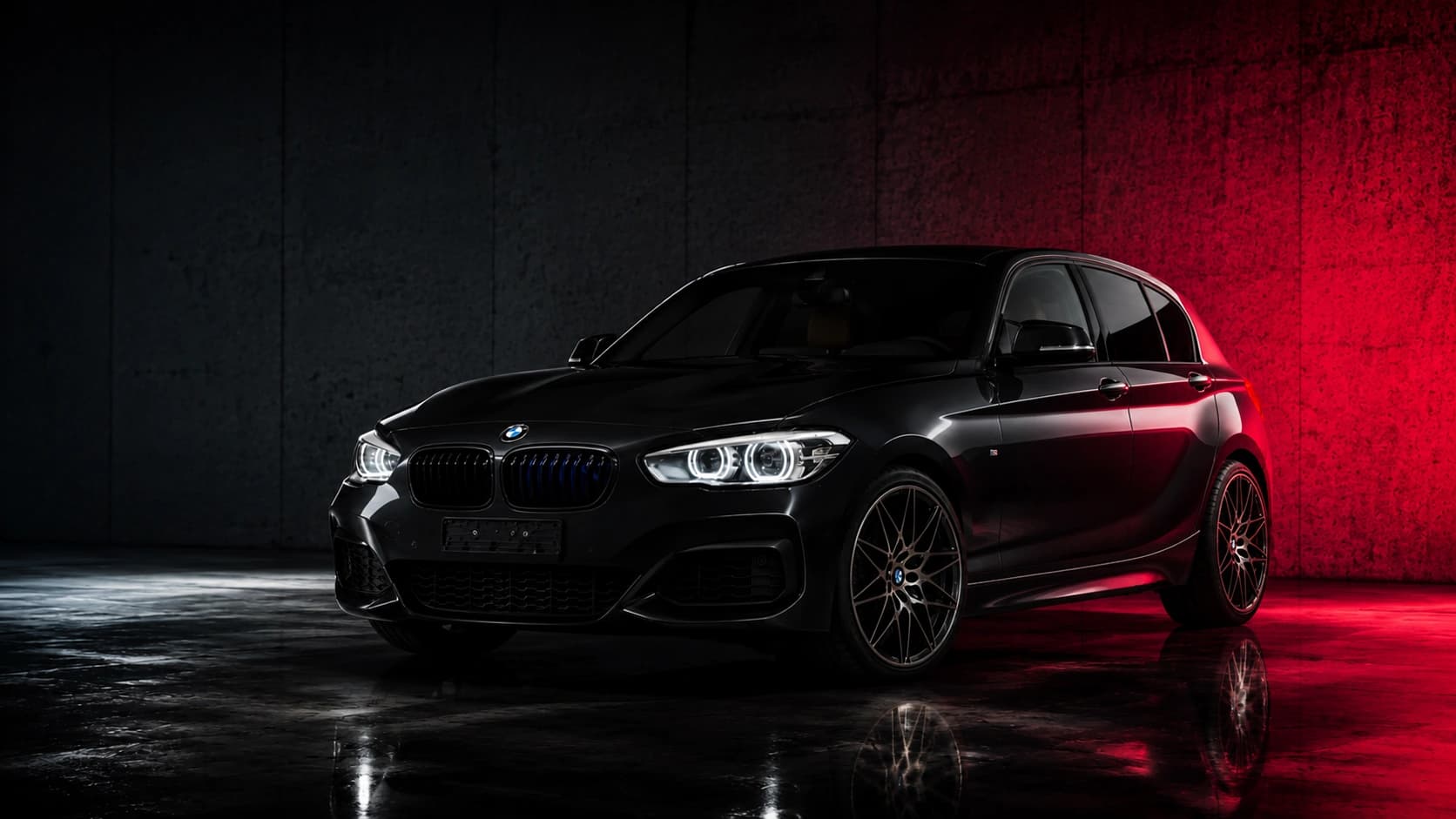
A BMW M140i produced before July 2018 is structurally worth more than an otherwise identical example built six months later — and Swiss automated valuation tools simply do not account for this. The difference comes down to a petrol particulate filter (OPF) that BMW fitted to the B58 engine to meet Euro 6c emissions standards, with a measurable effect on exhaust note, throttle response, and, consequently, real-world value on the performance used car market. The difficulty is that Eurotax, Comparis, and similar platforms assess vehicles by model year and trim level, never by exhaust configuration. The result: an uninformed seller can easily leave CHF 3,000 to 6,000 on the table — or, worse, list at a price that reads as inconsistent to buyers who already know the distinction.
TL;DR — A pre-OPF M140i (production date before approximately 07/2018) is a rare, sought-after configuration that automated valuation tools overlook entirely. Check the VIN and first registration date, document the original factory specification, and price against real comparable listings rather than Eurotax figures.
Pre-OPF vs Post-OPF: What BMW Changed on the B58 Engine in July 2018
In July 2018, BMW brought the B58 six-cylinder into compliance with Euro 6c by fitting an OPF (Otto Partikel Filter, or petrol particulate filter) as standard. Every M140i produced from that date onwards carries one. Units that left the factory before this cut-off retain their Euro 6b homologation and an unfiltered exhaust configuration — the pre-OPF setup that the market now actively seeks out.
The B58 Before and After July 2018: Two Distinct Homologations
The OPF captures fine particulates produced during petrol combustion. This has three direct mechanical consequences:
- Additional back-pressure at the collector outlet, which subtly alters the perceived torque curve under spirited driving.
- A more muted exhaust note, particularly on overrun and during the characteristic B58 pops on deceleration — a defining trait of pre-OPF cars.
- A more complex and costly tuning path (downpipe, Stage 1/2 remap) on filtered variants, since any intervention affecting the OPF touches the vehicle's homologation.
This point is worth stating plainly: a pre-OPF M140i is neither an anomaly nor a borderline build. It is a factory configuration, legally homologated to Euro 6b, and fully compliant with Swiss road regulations. The Fahrzeugausweis confirms this.
Why German-Speaking Buyers Specifically Filter for "ohne OPF"
On AutoScout24.ch, the national inventory of M140i across all configurations rarely exceeds around forty active listings, and genuinely pre-OPF examples represent a fraction of that figure — often fewer than one in three, depending on the period. German-speaking buyers have absorbed this reality: searching "BMW M140i ohne OPF" has become a standard filter on forums and classified platforms alike. This structural scarcity is precisely why a well-documented pre-OPF example does not negotiate at the same level as a post-2018 car, all else being equal.
How to Confirm Your Configuration Using the VIN and Vehicle Registration
The only reliable proof that an M140i is pre-OPF is the production date encoded in the VIN — not the date shown on the vehicle registration document. A car that left the Leipzig factory in June 2018 may have sat in dealer stock and only been registered in October or November of that year. An listing displaying "10/2018" is not inaccurate, but it is incomplete: without a VIN check, there is no way to determine whether the car meets Euro 6b (pre-OPF) or Euro 6c (post-OPF) standards.
Reading the Production Date from the VIN: Position by Position
A BMW VIN contains 17 characters. Two positions are relevant here:
- Position 10: the model year. For a pre-OPF M140i, this character is J (2018). Bear in mind that BMW's model year typically begins in July of the preceding calendar year.
- Positions 11 to 17: the serial number, which includes an internal code indicating the month of production. BMW does not publish this officially, but the exact month appears on the manufacturer's plate (driver's door pillar) and in the BMW production report, which BMW customer services can provide free of charge upon request with the VIN.
A recognised third-party decoder — such as VINdecoderz, or the NHTSA database for structural validation — will confirm the engine code B58B30M0 and the applicable emissions standard. Cross-referencing these three sources — the manufacturer's plate, the BMW production report, and a VIN decoder — leaves no room for ambiguity.
The Vehicle Registration Document: What the Official Record Does Not State
The Swiss vehicle registration document (Fahrzeugausweis) lists the date of first registration (field 33) and the emissions standard (field 55, typically shown as "6" for Euro 6). It does not distinguish between 6b and 6c. Two M140i vehicles that appear identical on paper may therefore have fundamentally different exhaust treatment systems.
The M140i produced in March 2018 currently held on consignment at RG Automotive illustrates this precisely: first registered in Switzerland in May 2018, production confirmed as March 2018 by the BMW production report, no particulate filter fitted. Pre-OPF configuration verified against documentation.
Why Eurotax and Comparis Undervalue a Pre-OPF M140i
These valuation tools have no field for "without OPF". Their databases operate on standardised criteria — first registration date, mileage, factory options, service history — but the presence or absence of a particulate filter simply does not appear. Two M140is that look identical on paper, one from May 2018 (pre-OPF, F21 LCI, N55) and one from September 2018 (post-OPF, B58 with filter), receive the same estimate. The real difference in desirability is never captured.
The right reference: active listings, with dates
The only actionable market value is what other sellers are asking right now for comparable examples. A practical method on AutoScout24.ch:
- Model: BMW M140i (or M140i xDrive, depending on your configuration)
- Gearbox: manual if you are selling a manual (the price differs noticeably from the ZF 8HP automatic)
- Drivetrain: rear-wheel drive or all-wheel drive, as applicable
- First registration: ≤ June 2018
- Mileage: a range of ±20,000 km around your own figure
Collect at least six to eight active listings and note the publication date of each one.
Why the listing date matters
The market for petrol sports compacts is seasonal. Asking prices rise from February through May, soften over summer, recover briefly in autumn, then dip in November and December. A listing from March does not carry the same reference value as one from October for the same vehicle. Compare like-for-like seasons, or adjust accordingly.
Keeping the price range realistic
No fixed figure holds without live listings in front of you. Position your car within a range defined by three variables: actual mileage, options (Harman Kardon, sunroof, heated seats, adaptive LED headlights) and the documented condition of the bodywork and interior. That range is what you will defend when a buyer produces a Comparis estimate.
Legal vs Illegal Modifications: The Line Every Listing Must Respect
A M140i built without an OPF (production before July 2018) is fully compliant with the Swiss MFK roadworthiness inspection. A M140i produced after OPF introduction, with the filter subsequently removed, is not — and that distinction carries significant consequences for both the buyer and your liability as a seller.
Case 1: Factory-built without OPF, homologated Euro 6b
M140i units produced before the particulate filter was introduced (generally before July 2018 — confirm via the VIN and type-approval sheet 13.20A) are homologated under Euro 6b. The original exhaust line simply does not include an OPF. The MFK inspection proceeds without issue: nothing has been altered from the original type approval.
Case 2: Post-OPF vehicle with filter removed
A M140i produced after July 2018 was homologated with an OPF fitted. Removing that filter — even replacing it with a straight pipe section — constitutes a modification that deviates from the type-approval certificate. The consequences are concrete:
- Automatic MFK failure the moment the inspector identifies the absence of the original filter.
- A mandatory return to compliance (refitting a homologated OPF) before any legal resale can take place.
- Emissions bench testing will flag the anomaly even when the visual finish appears clean.
The seller's legal exposure
Selling a non-compliant vehicle without explicitly disclosing the situation exposes the seller to proceedings under Art. 93 SVG (Road Traffic Act — provisions on vehicle construction and equipment) and the relevant exhaust emissions ordinance. The fact that the buyer discovers the issue at their own MFK inspection does not shield the seller — it compounds the case against them.
The correct wording for your listing
Write:
"No OPF — factory specification, Euro 6b, produced 03/2018"
Avoid entirely:
"OPF removed" or "OPF deleted"
The first formulation describes a factory state. The second implies an illegal modification — it will deter every informed buyer, or attract precisely the wrong ones.
The Cumulative Factors That Widen the Value Gap
The absence of an OPF carries more weight when it combines with other sought-after criteria. On its own, it accounts for a few hundred francs; stacked with the right configuration, it can justify a CHF 2,000 to 4,000 premium over a generic post-2018 example.
The five parameters to document, ranked by impact:
- 6-speed manual gearbox: a configuration that is rapidly disappearing from the premium segment, and particularly valued by buyers seeking an M140i for driving pleasure. Lead with this in your listing title — ahead of the model year.
- Rear-wheel drive (RWD): a clear differentiator from xDrive variants, which are heavier and less engaging. Confirm via the VIN — body code F20 for the 5-door RWD version. An enthusiast buyer will check; make it straightforward for them.
- Factory M Performance options: adaptive suspension, M Sport brakes, Alcantara steering wheel, M Performance exhaust. Every factory-fitted option is traceable through the BMW Fahrzeugkonfiguration (the build sheet, obtainable from a dealer using the VIN). An option that cannot be proven does not exist in the buyer's eyes.
- BMW service history: stamped service book, invoices from a BMW dealer or approved garage, most recent service dated. A complete file routinely supports a CHF 500 to 1,500 premium over an example with an unclear maintenance record.
- Consistent mileage: below 80,000 km, the M140i sits in the upper bracket of the Swiss used car market. Beyond that, the price adjusts — without overselling or emotional discounting. High mileage that is well-documented (motorway use, regular servicing) is a stronger position than low mileage with no explanation.
Building a Seller's File: The Documents That Make the Difference
Before publishing your listing, gather the following: registration certificate (Fahrzeugausweis), a valid MFK inspection report, complete service booklet, maintenance invoices from the past three years, the original BMW build sheet, and — where available — receipts for recent tyres and consumables. This file turns a negotiation into a technical discussion, and shifts the conversation away from price reductions.
A Real Case: The March 2018 M140i Listed for Sale at RG Automotive
We currently have on consignment a BMW M140i produced in March 2018 — a specification that meets every criterion discussed above. It serves as a concrete illustration of how this valuation method translates into an actual sale.
Configuration Verified Point by Point
- Production date: March 2018, confirmed via VIN and the Swiss Fahrzeugausweis — pre-OPF, Euro 6b homologation.
- Transmission: 6-speed manual gearbox (the most sought-after variant among collectors and enthusiasts).
- Architecture: rear-wheel drive, factory B58 3.0L straight-six engine.
- Full documented service history, consistent mileage, second owner.
This prior verification avoids the back-and-forth that frustrates buyers who — quite reasonably — are wary of listings that remain vague about the exact production date.
Video as a Transparency Tool
The car has been filmed in full: cold start, rev build-up, original exhaust note, exterior and interior walkthrough. The video is published on our YouTube channel and embedded directly in the listing.
This approach addresses two recurring objections from German-speaking Swiss and cross-border buyers — who represent a meaningful share of demand for this model: uncertainty about the car's actual condition, and the reluctance to travel to Pont-en-Ogoz before knowing whether the car is worth the visit.
Pricing: Market Data, Not Eurotax
The asking price was set following a review of active listings on AutoScout24.ch at the time of consignment (Switzerland and the German border region), filtered specifically for pre-OPF manual M140i examples. Eurotax consistently undervalues this type of specification, as its model averages across the entire nameplate rather than accounting for the niche.
What RG Automotive Delivers to the Consignor
- Technical and documentary qualification of the exact configuration.
- Listing written in both French and German, with explicit reference to the criteria that drive value in the pre-OPF M140i Swiss market.
- Targeted distribution across French-speaking, German-speaking, and cross-border platforms.
- Contact filtering, supervised test drives, and negotiation conducted at our premises.
For more detail on how the consignment process works, visit our dépôt-vente page.
Frequently Asked Questions About Selling a Pre-OPF M140i in Switzerland
How can I confirm with certainty that my M140i is pre-OPF?
The registration date alone is not sufficient: a vehicle produced in June 2018 but registered in September may still be pre-OPF. The reliable reference is the production date, readable via the VIN (10th character + BMW decoding) or on the manufacturer's plate on the driver's door pillar. Before July 2018 = Euro 6b, no particulate filter fitted. The Certificate of Conformity (COC) confirms the homologation standard.
Eurotax gives me CHF X, but AutoScout24 shows more — which is correct?
Neither, taken in isolation. Eurotax is a statistical tool that does not distinguish between pre-OPF and post-OPF M140i, whereas the market does make that distinction. Active listings filtered on AutoScout24.ch (same model year, comparable mileage, ohne OPF) provide a more accurate real-world price range. Cross-reference both sources, then weight the result against condition and service history.
Can I sell an M140i from which the OPF has been removed?
Not as it stands. A vehicle modified outside its homologation will be rejected at the MFK roadworthiness inspection, and the seller remains liable under the statutory warranty for defects. Returning the car to its original specification — refitting the factory filter and passing an emissions check — is a non-negotiable prerequisite before any serious sale can proceed.
Is there a specific buyer pool for a pre-OPF M140i?
Yes, though the market is a focused one. German-speaking Swiss buyers and cross-border buyers from Germany actively filter for ohne OPF on AutoScout24.ch. Demand is genuine, typically stronger in spring and autumn, and quieter in winter. A seller in French-speaking Switzerland who overlooks this segment is effectively cutting themselves off from a significant share of qualified buyers.
Is it better to sell privately or through a consignment specialist?
That depends on the time you have available and your confidence in handling technical negotiations. A specialist consignment service will document the configuration accurately, produce a precise listing — bilingual where relevant — and present the vehicle to German-speaking buyers. No serious professional can guarantee a sale within a fixed timeframe or promise a systematic premium; treat any such claim with caution.
Selling a pre-OPF M140i at the right price requires being able to substantiate every claim: production date, original compliance, full service history, mechanical condition. That is precisely the groundwork we carry out before every vehicle goes live through our consignment service, with a detailed walk-around video and pricing based on comparable transactions rather than a generic algorithm. If you are weighing up a private sale against a structured consignment, a no-obligation valuation will at minimum give you a defensible price range to work from. And if you are looking to buy, the March 2018 M140i currently in our showroom is a concrete illustration of what "documented original specification" actually means.